
Fish farming is a business where every detail affects the final profit. One of the most important elements in industrial fish farming is the cage. Today we will analyze why more and more professional farms are switching to knotless nylon nets made using Japanese technology.
1. Fish Health
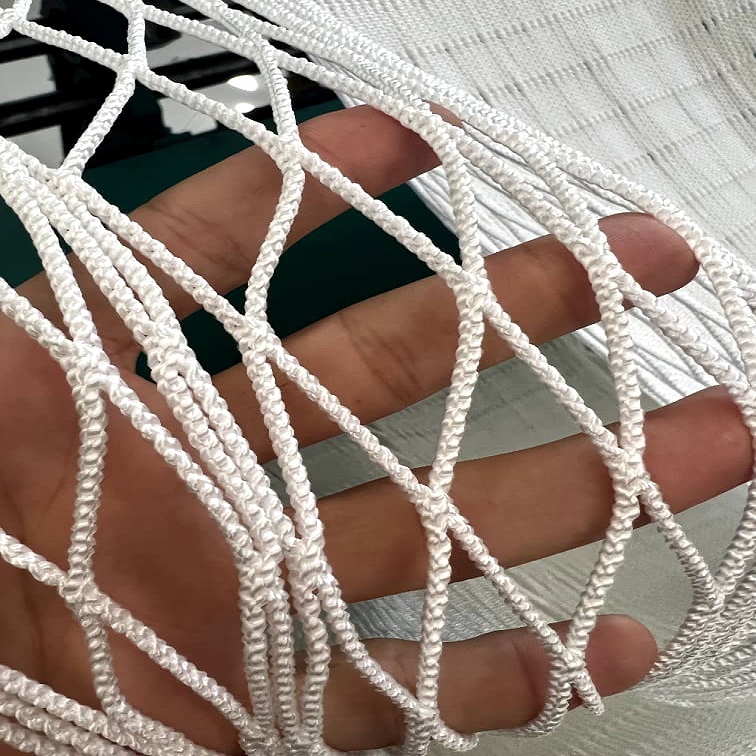
In conventional knotted nets, each knot acts as an abrasive. When fish rub against such a net, they receive micro-traumas, damaging scales and the protective mucus layer. Knotless netting is perfectly smooth. It does not traumatize the fish, which is especially important when growing trout and other valuable species.
2. Constant Mesh Size
In knotted nets under load or when wet, the knots can "creep", changing the mesh geometry. In knotless mesh, the material structure is created by weaving threads inside the fabric itself. This guarantees that the mesh size remains unchanged throughout its service life.
3. Reduced Biofouling
Knots are ideal places for algae and mollusks to attach. Knotless netting grows significantly slower and is much easier to clean by mechanical means. This improves water exchange and oxygen supply to the fish.
4. Economic Benefit
Although the price of a knotless net may be higher, its service life is 1.5–2 times longer than that of a conventional one. Given the costs of replacement, cleaning, and reduced fish loss, the project pays off much faster.
Want to know the cost of knotless net cages for your farm?
Use our online calculator or contact us directly.